

Reformer vs mat Pilates, in one minute
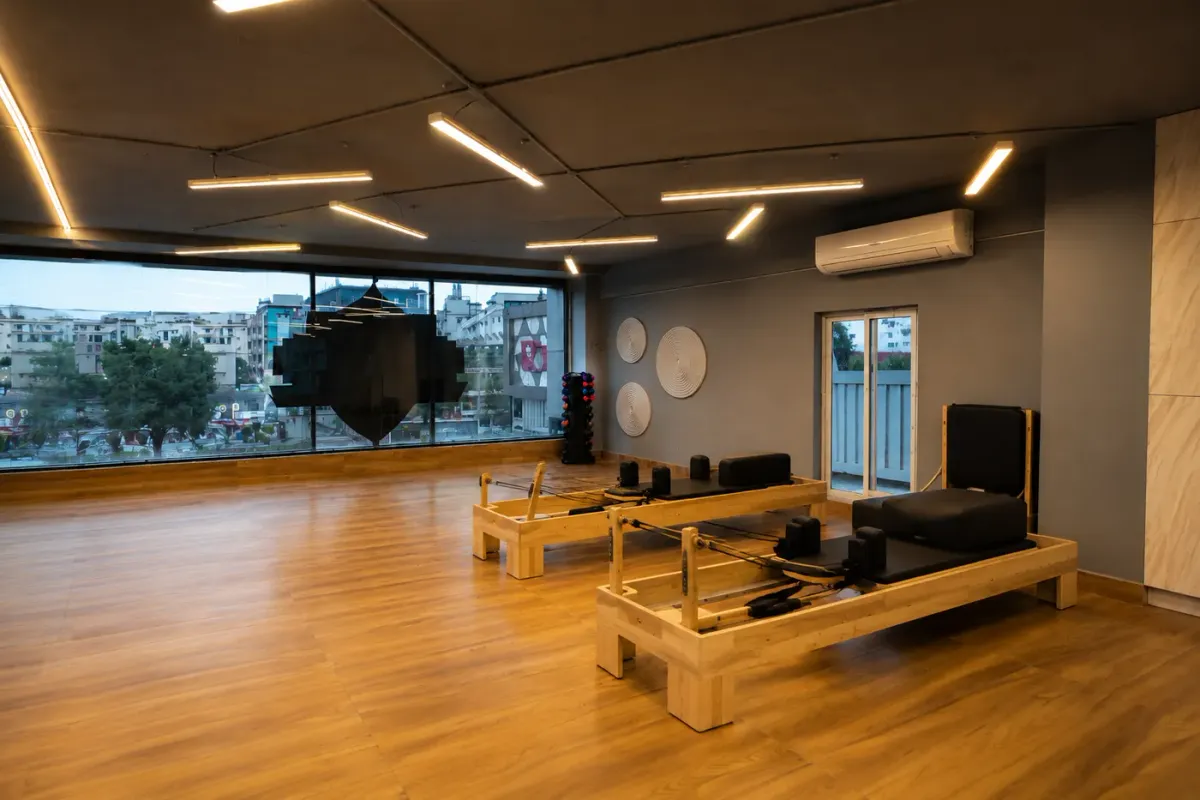
Reformer Pilates in Hyderabad is done on a sliding, spring-loaded carriage that adds adjustable resistance and support to every movement, while mat Pilates uses your own bodyweight on the floor with little or no equipment. Both build core strength, better posture and mobility, the difference is mainly the tool, the feedback you get, and how the load is applied. At V2 Fitness Zone we run full reformer and mat Pilates at all four Hyderabad branches, led by a certified physiotherapist and scaled from complete beginners through to advanced.
Neither one is better in the abstract. The right choice depends on your goals, your experience, and how you like to be challenged. Here is an honest look at each so you can pick with confidence, or simply do both.
What reformer Pilates is and who it suits
On the reformer, you lie, sit, kneel or stand on a moving carriage connected to springs, while straps and bars let you push, pull and stabilise through a wide range of positions. The springs can make an exercise easier by supporting you, or harder by loading you, which is why the same machine works for a first-timer and a seasoned mover.
Reformer Pilates suits people who want clear guidance on form, who enjoy progressive resistance, or who are returning to movement and want controlled support as they rebuild strength. It is also a strong fit if you find purely bodyweight core work tough to feel, because the carriage gives constant feedback and gently nudges you into better alignment.
What mat Pilates is and who it suits
Mat Pilates strips it back to you, the floor, and gravity, sometimes with small props like a ring, a band or a soft ball. Because nothing is supporting you, your deep core has to do the stabilising work itself, which builds genuine, portable control you can carry into everything else you do.
Mat Pilates suits people who want to feel their own body working without a machine, who like the convenience of practising the principles anywhere, and who want to sharpen control, breathing and body awareness. It pairs beautifully with weight training and running, and it is an easy, low-barrier way to start if reformer time is fully booked.
The benefits: core, posture and mobility
Both styles are built around the same fitness goals. Core strength comes first, Pilates trains the deep muscles around your trunk to work together, which steadies you in the gym and in daily life. Better posture follows, because so much of the work teaches your spine, shoulders and hips to sit and move in a tidier line.
Mobility is the third win. Controlled, full-range movement keeps your joints moving freely and your body feeling looser and more capable. We frame all of this as fitness and wellness training, not as medical treatment, Pilates here is about moving and feeling better, building a stronger base for the rest of your training.
What a session is like and why physio-led matters
A typical session starts with breath and a gentle warm-up to switch on your core, then moves through a sequence that builds control, strength and length, before easing down to finish. Reformer classes flow with carriage and spring changes between exercises; mat classes flow from one floor position to the next. Both are deliberate and controlled rather than rushed, and both can be made gentler or tougher to match the room.
A physio-led setup matters because a certified physiotherapist understands how bodies move, load and compensate, and can scale every exercise to the person in front of them. That means cleaner technique, sensible progression, and options when something needs to be adapted, so beginners feel safe and looked after, and advanced members keep being genuinely challenged.
Full reformer and mat Pilates are included with our Signature and VIP memberships at every V2 branch. Come try a session, see which one clicks, and train where it counts.