

What recovery actually is
Gym recovery is everything your body does to adapt after a training session, and it is the part where progress actually happens. When you train, you break tissue down, drain energy stores, and stress the nervous system. The session is the stimulus. Recovery is when the body reads that stimulus and rebuilds, a little stronger than before. Skip it, and you are repeating the stress without ever collecting the reward.
Most people think of recovery as doing nothing. It is closer to the opposite. It is a set of deliberate choices, sleep, food, movement, and rest, that decide how much of your hard work in the gym turns into a real result.
Why recovery matters as much as the session
You do not get stronger during a workout. You get stronger in the hours and days after it, while you sleep and eat and let the body catch up. A great session followed by poor recovery gives you a fraction of what you earned. A reasonable session followed by good recovery often beats it.
There is a ceiling to how much hard training a body can absorb. Push past it without recovering, and you start moving backwards, flatter sessions, worse sleep, nagging aches, less motivation. Train hard, recover well, and that ceiling keeps rising. This is the whole game, and it is why we treat recovery as part of training, not a luxury after it.
The three basics: sleep, nutrition, active recovery
Sleep is the foundation. It is when most of the rebuilding and hormonal reset happens. If you train hard and sleep badly, you have capped your results before you have eaten a single meal. Aim for a consistent seven to nine hours, with a regular bedtime your body can rely on.
Nutrition is the raw material. Protein gives the body what it needs to repair muscle. Carbohydrates refill the energy you burned. Water keeps everything moving. You do not need to be perfect, but you do need to eat enough, and eat with some intention, especially around your sessions.
Active recovery is gentle movement on your off days, a walk, an easy cycle, some mobility or stretching, a light class. It keeps blood flowing to tired muscles and helps you feel loose rather than stiff. The idea is to move, not to train. Easy stays easy.
What a dedicated recovery zone adds
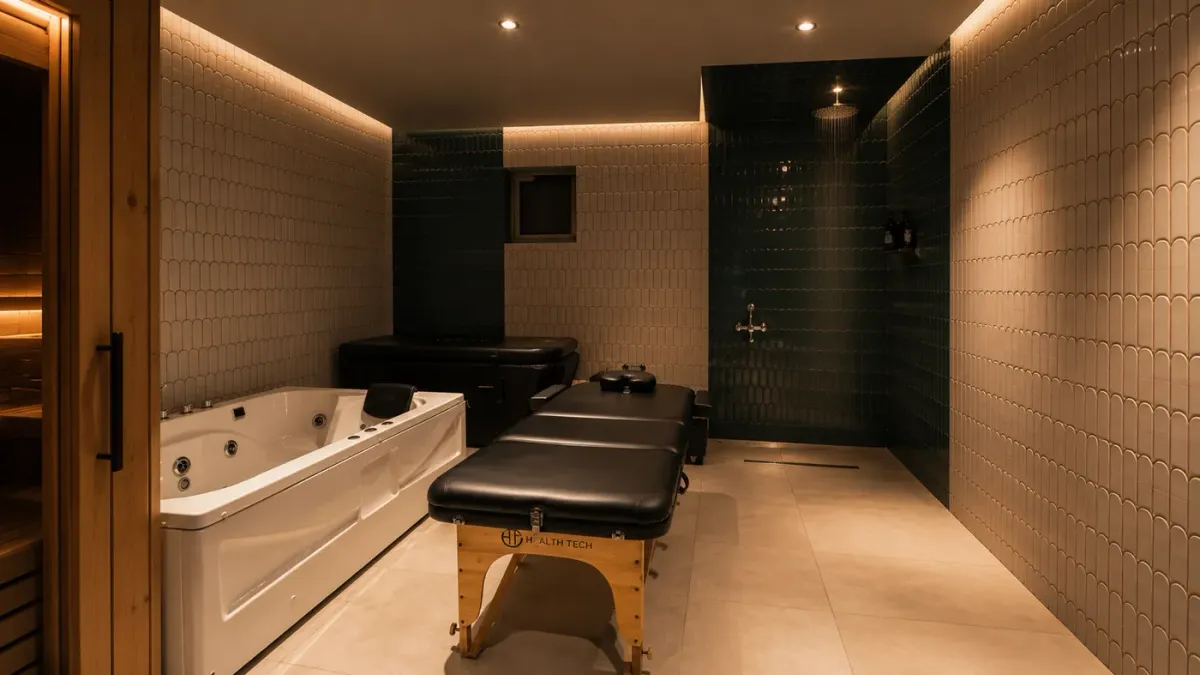
Sleep and food do the heavy lifting. A recovery zone is the layer on top, tools that help you feel better between sessions and turn up fresh for the next one. Contrast work like an ice bath and a hot jacuzzi, a dry sauna to unwind in, compression boots for tired legs, percussion and cupping for tight spots, a red-light cabin to relax in after a heavy week. Used regularly, these become part of a routine that keeps you consistent.
The point is consistency. The easier recovery is to reach, the more often you will actually do it. At V2 it is fifteen steps from the gym floor, so it fits into the session you are already doing rather than becoming one more thing to plan. Our recovery rooms at Secunderabad, Miyapur and Kompally hold the full suite, and Sainikpuri keeps portable recovery tools on the floor.
If you want to see how your training and recovery are actually landing over time, an InBody 380 scan gives you a clear estimate of your body composition at every branch. It turns a vague sense of progress into numbers you can train against.
A simple way to start
Do not overhaul everything at once. Fix sleep first, it pays the biggest dividends. Then get protein and water consistent. Add one easy movement day a week. Then start using the recovery zone after your harder sessions and see how the next day feels.
Recovery is not the reward for training. It is part of it. Get it right and every session you do counts for more. That is what we mean when we say train where it counts.